
To operate as a true “Frontier firm” today, simply having employees use AI is no longer enough. The real advantage comes from reimagining workflows and embracing AI agents as part of everyday operations. Sounds easy enough - or is it? In practice, leaders quickly encounter a very human barrier: resistance to change. Our tendency to cling to what feels familiar and safe is hard-wired into us. Organizations have been working with structured change management models like Prosci’s ADKAR for decades, yet resistance grows stronger as technology starts to feel increasingly “human.” In this blog post, we explore why people feel uneasy about AI agents - and how leaders can help teams embrace these new digital coworkers with confidence.
People don't resist AI agents because of the technology. They resist because agents feel almost human, and that triggers very human reactions.
-
Why it happens: the "uncanny valley" effect, plus three deeper fears: fear of loss, uncertainty about expectations and trust that hasn't been earned yet.
-
What leaders can do: create psychological safety, build trust through hands-on experience and guidance, and encourage a growth mindset.
The bottom line? Technology doesn't transform organizations. People do. Give your teams clarity, practice and support, and AI agents become digital coworkers they actually want to work with.
The “uncanny valley” concept
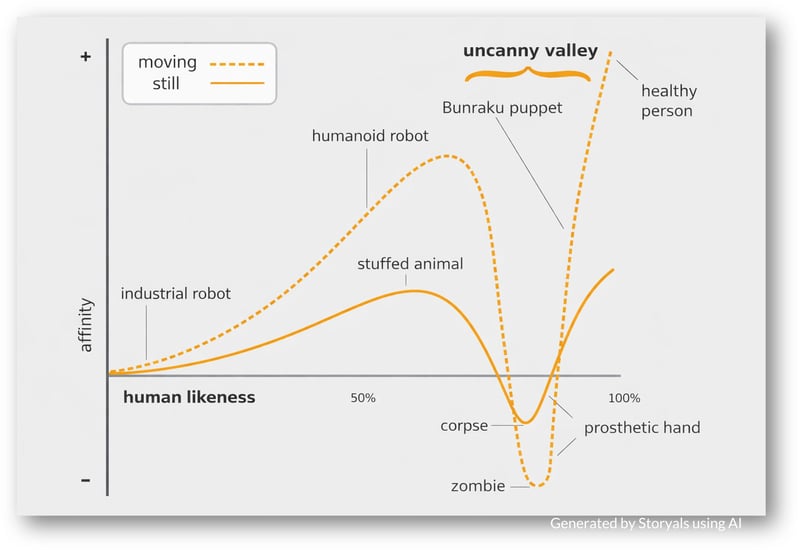
If you’ve ever felt a bit unsettled when technology behaves a little too much like a person, you’re not alone. At Storyals, some of our team members were surprised when the Microsoft Copilot Facilitator agent suddenly appeared in our weekly meetings. This reaction reflects a psychological concept called the uncanny valley, introduced by Japanese roboticist Masahiro Mori in the 1970s. He noticed that as machines look or behave more human-like, our comfort increases - until the point where they become almost human. Then our comfort suddenly drops into a “valley” of unease. Mori also observed that movement intensifies the effect - an unnatural blink or stiff gesture can make a robot feel more unsettling.
In a recent meeting, some of the team members at Storyals had a look at the newly launched humanoid home robot “Neo,” from 1X - and “freaky” was a joint consensus.

It’s important to note that the uncanny valley concept doesn’t only apply to physical robots. AI agents that write like colleagues, facilitate meetings, or make decisions on our behalf can trigger similar reactions - especially when they feel almost, but not entirely, human.
Why people feel resistance toward AI agents
While the uncanny valley explains some discomfort, resistance often stems from deeper psychological factors. Three stand out:
1. Fear of loss
Employees may worry about losing competence, autonomy, or professional identity - especially when AI takes on tasks once linked to human expertise. It’s normal that we get a bit freaked out and fear the loss of our jobs! “What will you need me for now?” was Storyals’ Marketing Manager’s reaction when she saw a marketing plan created by the Researcher agent.
2. Uncertainty about expectations
People hesitate when they’re unsure what AI agents will do, what they remain responsible for, or how their workflows will change. For example, how will the role of the Project Manager be impacted when your organization starts using the Project Manager agent in Planner?
3. Trust that must be earned
AI systems can feel unpredictable and unreliable. Trust grows through clarity, transparency, and real experience - not through technology rollouts alone. Simply purchasing Microsoft 365 Copilot licenses and enabling agents won’t deliver the desired outcomes. Trust for AI agents must be earned.
Recognizing these human instincts will help you as a leader design adoption strategies that reduce fear rather than amplify it.
Recommendations for overcoming resistance
To unlock the full value of AI agents, organizations need more than technology - they need a thoughtful, human-centered approach. Here are some recommendations to follow:
 Create psychological safety
Be clear about why AI agents are being introduced and what they will and won’t do. Emphasize that human judgment, creativity, empathy, and experience remain essential, even as AI automates routine tasks. Be clear in your communication and avoid vague reassurances like “AI won’t replace anyone” if that’s not certain. Instead, communicate specifics, for example, “We are deploying an agent to handle routine support tickets so that our support staff can focus on complex customer issues and relationship-building.”
Build trust through hands-on experience and guidance
Provide employees with low-risk opportunities to test AI agents in real-world scenarios. In our Storyals’ training sessions, confidence grows quickly when people see the benefits for themselves. Don’t just turn on AI agents without offering guidance, recommended use cases, and clear expectations of how agents are to be used. Structure and “know-how” reduce uncertainty and help employees know where to start.
Encourage a growth mindset
Model curiosity and share your own learnings. This helps shift thinking from “Will this replace me?” to “How can this support me?” Invite feedback early on. Resistance often means people care. Involving them in shaping how AI agents are used can transform skepticism into advocacy. Encourage a growth mindset and emphasize that this is a shared journey we are all on together!
As you move forward with your AI adoption journey, remember that continued learning and support are key to lasting success. Storyals Training Programs offer practical, hands-on guidance for end users and full-day workshops on getting started with agents. Please reach out to us at hello@storyals.com or via any of our social channels to learn more.
Frequently asked questions
Why do employees fear AI agents?
Most resistance comes from three very human reactions: fear of loss (of competence, autonomy or professional identity), uncertainty about what agents will do and what people remain responsible for, and a lack of trust in systems that can feel unpredictable.
What is the uncanny valley in AI?
The uncanny valley is a concept introduced by Japanese roboticist Masahiro Mori in 1970. As machines become more human-like, our comfort grows until they become almost human. Then it drops into a valley of unease. AI agents that write like colleagues or facilitate meetings can trigger the same reaction.
How can leaders reduce resistance to AI agents?
Create psychological safety by explaining why agents are introduced and what they will and won't do. Build trust through low-risk, hands-on experience with clear guidance and use cases. Encourage a growth mindset by sharing your own learnings and inviting feedback early.
How should leaders talk about AI agents and jobs?
Avoid vague reassurances like "AI won't replace anyone" if that isn't certain. Communicate specifics instead, for example: an agent will handle routine support tickets so the support team can focus on complex customer issues and relationship-building.
Watch the Video Blog
Looking for a quick overview? This video blog summarizes the key concepts, best practices, and actionable takeaways from this article, helping you apply these insights in your organization and get more value from Microsoft 365, Copilot, AI, and modern workplace tools. Watch the episode below.